Planning Basketball Training in Los Angeles Before LA28
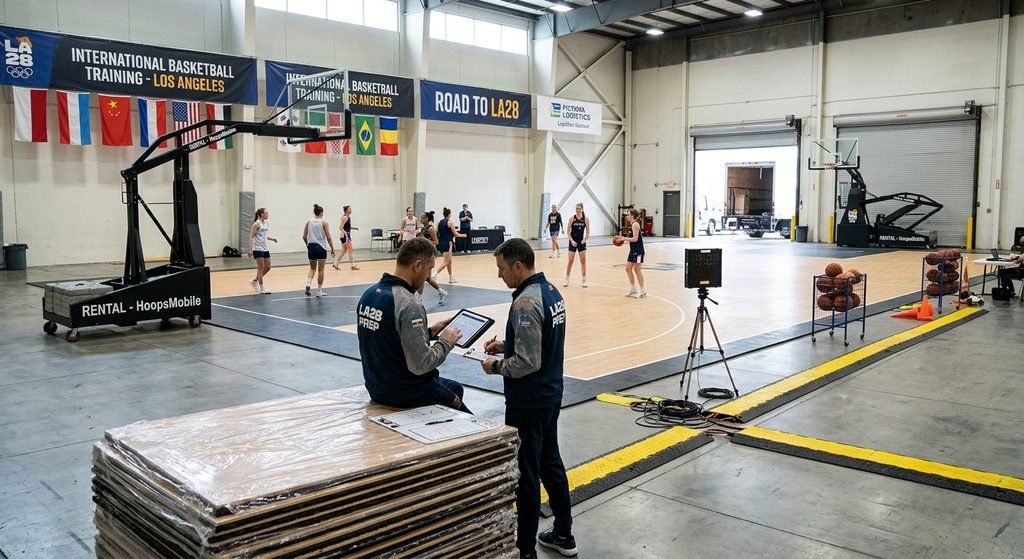
For international basketball teams, federations, coaches, and sports organizations, planning training in Los Angeles ahead of LA28 involves more than finding a court. Teams may also need to coordinate facility access, basketball equipment, training schedules, transportation, and installation requirements.
Starting early can help organizations identify their needs, compare available options, and prepare a practical plan for training camps, practice sessions, and related basketball activities.
HoopsMobile supports basketball equipment rental and selected temporary court projects in Los Angeles, helping organizations explore equipment and logistics options based on their requirements.
1. Start Planning Before Your Team Arrives
The earlier a team defines its training requirements, the more time it has to evaluate facilities, equipment availability, and logistics.
A useful starting point is to establish:
- Expected arrival and departure dates.
- Training dates and daily practice schedule.
- Number of players and coaching staff.
- Preferred training location.
- Indoor or outdoor court requirements.
- Equipment needs and technical specifications.
- Delivery, installation, and removal timelines.
Teams with specialized equipment requirements or limited setup windows should communicate these needs as early as possible.
For organizations considering a visit to Los Angeles during 2027, an advance assessment can help identify potential facility and equipment requirements before final plans are made. Availability and access must still be confirmed with the relevant facilities and suppliers.
2. Identify the Right Training Facility
The facility should match the team’s training objectives, available time, and equipment requirements.
Before confirming a location, evaluate the following factors.
Court Space and Layout
Confirm whether the facility can accommodate the required training format. A 5×5 program, a 3×3 session, and an individual skills workout may require different layouts and supporting equipment.
Check the court dimensions, available practice areas, ceiling height for indoor facilities, and space around the playing surface.
Basketball Hoops
Confirm the type and number of hoops available at the facility.
If temporary or additional hoop systems are required, determine whether the venue permits their installation and whether the floor, access route, and available space can accommodate them.
Facility Access
Ask about loading areas, parking, delivery windows, elevators, stairs, security procedures, and any restrictions on equipment installation.
These details are particularly important when equipment must be delivered and installed within a limited time.
Scheduling and Shared Use
If the facility is shared with other teams or organizations, confirm the team’s reserved hours, equipment access, setup time, and any restrictions on changing the court layout.
3. Prepare an Equipment List for Basketball Training
The equipment list should reflect the team’s training plan rather than relying on a generic package.
Depending on the program, teams may require:
- Professional basketball hoop systems.
- Basketballs in the appropriate sizes and quantities.
- Ball carts and storage racks.
- Shot clocks and scoreboards.
- Training accessories.
- Temporary court flooring or floor protection.
- Additional equipment for specialized sessions.
Confirm the exact specifications and quantities before requesting quotations.
If particular competition standards or product approvals are required, identify them at the beginning and verify the selected models through current official information and manufacturer documentation.
Equipment for 5×5 Training
A 5×5 program may require a full court with two baskets, appropriate basketballs, and additional equipment based on the team’s practice schedule.
Confirm court dimensions, hoop specifications, ball requirements, and any timing or scoring equipment needed.
Equipment for 3×3 Training
A 3×3 setup typically uses one basket and a marked playing area. Depending on the training plan, teams may also require a suitable playing surface, 3×3 basketballs, a shot clock, and supporting equipment.
The exact setup should be based on the intended use and any applicable technical requirements.
For more information, read our guide to FIBA 3×3 basketball court dimensions and equipment requirements.
4. Decide Whether to Rent or Purchase Equipment
For teams training in Los Angeles temporarily, renting selected equipment may be more practical than purchasing items that will not be needed after the program.
Rental may be worth considering when:
- The team will be in Los Angeles for a limited period.
- Equipment is required for a temporary training facility.
- Transporting large equipment internationally would be difficult.
- Long-term storage is not available.
- Delivery and installation support would simplify the project.
Purchasing may be appropriate for organizations establishing a permanent facility or expecting regular use over several seasons.
Some teams may choose a combination: using equipment already available at the facility, renting additional items, and purchasing equipment intended for long-term use.
Compare quotations using equivalent equipment specifications and clearly defined service scopes. Include delivery, installation, storage, maintenance, and removal costs where applicable.
5. Plan Delivery, Installation, and Removal
Equipment logistics should be treated as part of the training plan.
A team may have a suitable equipment list but still encounter challenges if the delivery schedule conflicts with facility access or if the installation area is difficult to reach.
Before confirming arrangements, provide:
- The facility’s complete address.
- Requested delivery date and time.
- Required installation completion time.
- Equipment dimensions and quantities.
- Loading dock and unloading information.
- Elevator, stair, forklift, or access restrictions.
- Contact information for the venue representative.
- The planned removal date for rented equipment.
For larger equipment systems and temporary flooring, photographs and site plans can help clarify the installation route and available space.
If the venue has a strict opening time or limited access window, build a reasonable buffer into the schedule.
Explore our basketball equipment delivery and installation options in Los Angeles to discuss your project’s requirements.
6. Evaluate Temporary Court Flooring and Surface Protection
Some teams may need a temporary playing surface or protection for an existing facility floor.
Before selecting a solution, establish the intended training activities, surface conditions, installation period, and facility requirements.
Questions to consider include:
- Is the training taking place indoors or outdoors?
- What surface is already in place?
- Is temporary flooring necessary?
- Are there restrictions on adhesives, anchors, or floor protection materials?
- How much time is available for installation and removal?
- Does the facility require approval of the proposed surface?
Not every facility needs temporary flooring. The decision should be based on the existing court, the training program, and the venue’s requirements.
For projects involving 3×3 basketball, review the available playing-area dimensions and flooring options before finalizing the layout.
7. Coordinate the Training Schedule With Equipment Requirements
The daily schedule can affect the equipment required and when it must be available.
For example, a team conducting multiple sessions may need equipment to remain installed throughout the training period. A single-day exhibition or temporary event may require a different delivery and removal plan.
Create a simple schedule that identifies:
- Facility access and handover.
- Equipment delivery.
- Installation and any necessary checks.
- Training start and finish times.
- Changes to the setup, if required.
- Equipment removal and site handback.
Assign a contact person to coordinate the facility, coaching staff, and equipment provider.
If the schedule changes, communicate the update promptly so that delivery, labor, and installation arrangements can be reviewed.
8. Build a Practical Equipment Budget
A useful project budget should include more than the rental rate or purchase price.
Depending on the project, account for:
- Equipment rental or purchase.
- Delivery and transportation.
- Installation and removal labor.
- Temporary flooring and accessories.
- Required documentation or insurance.
- Applicable taxes.
- Storage and maintenance for purchased items.
- Potential schedule changes or additional service requirements.
Request a written quotation with clear inclusions and exclusions.
If your team is comparing several suppliers, use the same equipment specifications, dates, and delivery requirements for each quotation. This makes the comparison more meaningful.
9. Use an Early Assessment Visit to Reduce Uncertainty
For organizations planning training in Los Angeles, an advance visit can be useful when the facility, equipment requirements, or logistics are not yet finalized.
A visit may help the team assess the training space, confirm access arrangements, review equipment requirements, and identify questions that need to be resolved before the final schedule is approved.
A practical assessment checklist includes:
- Facility address and access route.
- Court dimensions and surface condition.
- Existing hoop systems and available equipment.
- Additional equipment requirements.
- Delivery and installation access.
- Storage or staging space.
- Training schedule and venue restrictions.
- Open technical or procurement questions.
An assessment visit does not guarantee facility availability or equipment reservations. Those arrangements should be confirmed separately with the relevant parties.
10. How HoopsMobile Can Support Basketball Training in Los Angeles
HoopsMobile provides basketball equipment rental and selected temporary court solutions in Los Angeles. Depending on equipment availability and project scope, services may include basketball hoop rentals, basketball equipment, 3×3 court solutions, delivery, installation, and removal.
We can discuss your planned dates, training facility, equipment list, and logistics requirements to help evaluate potential options for your project.
To get started, share:
- Your training dates.
- The facility location.
- Whether you need 5×5, 3×3, or another basketball setup.
- The equipment and quantities required.
- Any relevant technical specifications.
- Your delivery, installation, and removal schedule.
Planning basketball training in Los Angeles ahead of LA28?
Contact HoopsMobile to discuss your equipment requirements and local project logistics.
HoopsMobile is an independent basketball equipment rental and project support provider. It is not affiliated with or an official supplier of LA28 or FIBA. Equipment availability, facility access, product approvals, and technical requirements must be confirmed for each project.


