LA28 Basketball Equipment Rental vs. Purchase for International Teams
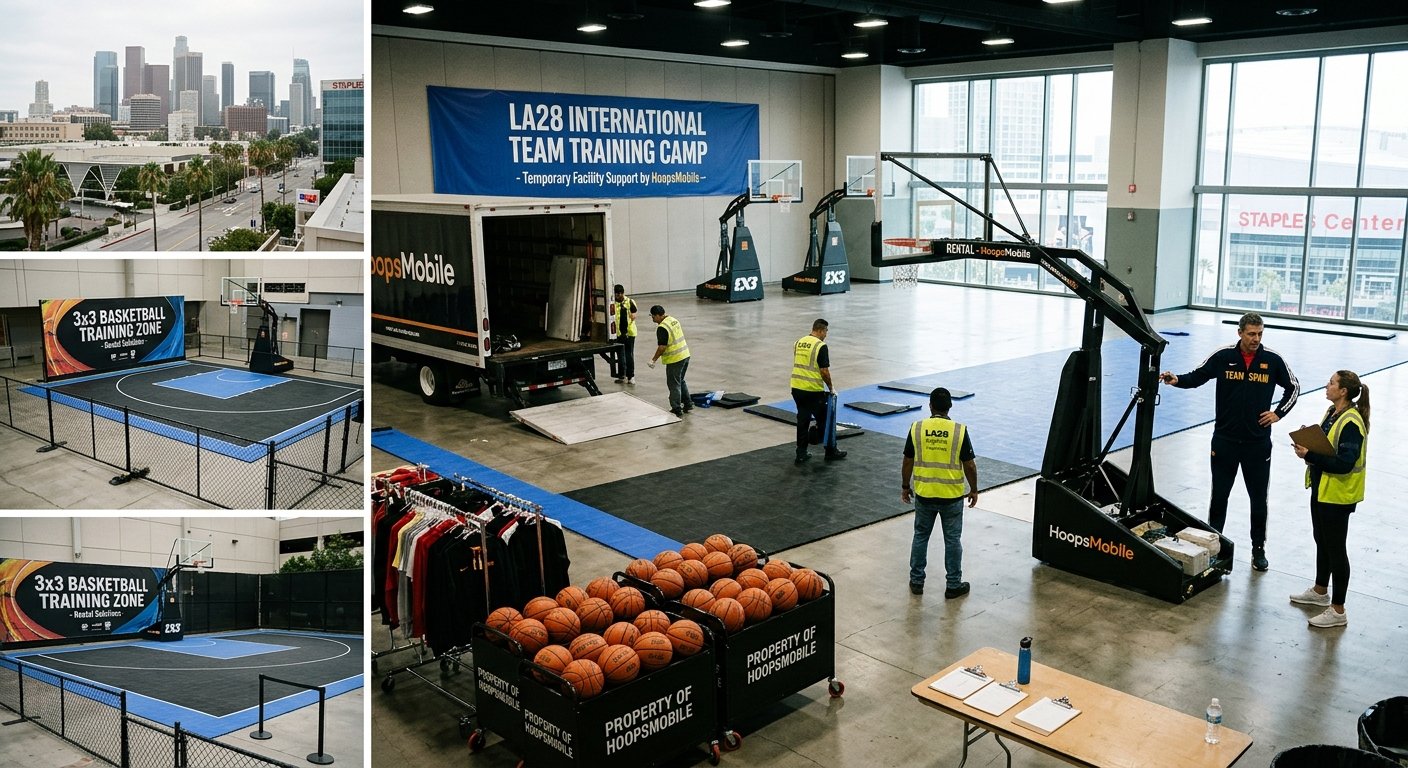
International basketball teams, sports federations, coaches, and event organizers preparing for Los Angeles 2028 may need to decide whether to rent or purchase basketball equipment for training camps, temporary facilities, exhibitions, and related events.
The right choice depends on the length of the project, equipment specifications, transportation requirements, installation needs, storage options, and future use. For organizations planning basketball activities in Los Angeles, comparing rental and purchase options early can help simplify logistics and budgeting.
HoopsMobile provides basketball equipment rental and project support in Los Angeles, helping teams and organizers explore equipment solutions based on their specific needs.
1. When Does Basketball Equipment Rental Make Sense?
Renting may be a practical option when equipment is required for a limited period or for a specific project.
For example, an international team planning a short training camp in Los Angeles may need professional basketball hoops, basketballs, ball carts, shot clocks, or temporary court flooring without needing to own those items afterward.
Rental can be worth considering when:
- Equipment is needed for a short training camp or event.
- A team is using a temporary training facility.
- Equipment must be delivered, installed, and removed within a defined schedule.
- Long-term storage would be difficult or expensive.
- The organization wants to evaluate equipment needs before committing to a purchase.
- Multiple projects have different equipment requirements.
The best rental solution depends on availability, rental duration, equipment specifications, transportation, labor, and the condition of the facility.
2. When Should Teams Consider Purchasing Basketball Equipment?
Purchasing may be more suitable when equipment will be used regularly over an extended period.
A federation, academy, university, or training center establishing a permanent basketball facility may benefit from owning selected equipment rather than repeatedly renting it.
Purchasing may be worth evaluating when:
- The facility will operate throughout the year.
- Equipment will be used frequently over several seasons.
- The organization has suitable storage and maintenance arrangements.
- The equipment specifications are expected to remain consistent.
- The organization wants long-term control over its inventory.
- The total cost of ownership is favorable compared with repeated rentals.
Purchase decisions should also account for shipping, import requirements where applicable, installation, maintenance, repairs, storage, and eventual replacement.
3. Rental vs. Purchase: What Should You Compare?
A useful comparison goes beyond the initial rental fee or purchase price.
| Consideration | Rental | Purchase |
|---|---|---|
| Project duration | Often suitable for temporary use | Often suitable for long-term use |
| Initial commitment | Based on rental terms and project scope | Usually requires a larger upfront investment |
| Storage | May be unnecessary after the rental ends | Must be arranged by the owner |
| Maintenance | Responsibilities depend on the rental agreement | Generally managed by the owner |
| Delivery and installation | May be available as part of a service package | May require separate planning and costs |
| Future use | Equipment is returned at the end of the rental | Equipment remains available for future projects |
| Flexibility | Can suit changing short-term requirements | Best planned around long-term requirements |
| Availability | Depends on inventory and requested dates | Depends on manufacturing and delivery lead times |
Actual costs vary by product, project duration, location, and service requirements. Teams should compare written quotations with equivalent specifications and clearly defined service scopes.
4. Which Basketball Equipment Can Teams Rent or Purchase?
The equipment required will depend on whether the project involves traditional 5×5 basketball, 3×3 basketball, team training, or a larger sporting event.
Basketball Hoops and Goal Systems
Teams may require professional basketball hoop systems for training sessions, temporary courts, or event spaces.
Before renting or purchasing, confirm the exact model, intended use, backboard and rim specifications, safety padding, installation requirements, and any applicable competition or facility standards.
For temporary projects, rental may help avoid the need to transport and store large equipment after the training period.
Explore our basketball hoop rental options in Los Angeles to discuss your project requirements.
Basketballs and Training Accessories
Basketballs, ball carts, racks, and other training accessories can be essential for teams preparing for organized practice sessions.
Confirm the required ball sizes, quantities, and intended use. For international teams, the appropriate equipment should be selected according to the applicable rules and training plan.
Shot Clocks and Scoreboards
Depending on the training program or event, a team may need shot clocks, scoreboards, or other timing and scoring equipment.
Confirm the required functions, power connections, mounting arrangements, and compatibility with the planned setup before committing to a rental or purchase.
3×3 Basketball Courts and Flooring
A 3×3 training or event project may require a suitable playing surface, court markings, one basketball hoop, and supporting equipment.
The decision to rent or purchase flooring depends on how frequently it will be used, whether the organization has suitable storage, and whether the surface is needed at one location or across multiple projects.
Review our 3×3 basketball court rental solutions and basketball flooring options to explore possible approaches.
5. Why Local Logistics Matter in Los Angeles
For international teams, equipment procurement is only one part of the planning process. Delivery, installation, facility access, storage, and removal can significantly affect the overall project.
Before requesting a quotation, prepare the following information:
- Training or event dates.
- Facility address and site contact.
- Indoor or outdoor location.
- Court dimensions and available installation space.
- Equipment list, specifications


